Annabel Ross
I am writing to thank you sincerely for the generous grant you awarded me this year. Your support has meant a huge amount to me, both financially and personally, and I am incredibly grateful for the difference it has made.
After having to intermit my studies last year following a family bereavement, returning to medical school and continuing with my degree was something I was determined to do, but it also came with a significant financial burden. The grant from the Kidderminster Medical Society gave me the financial security to focus on getting back into my studies and making the most of the year, without having to worry as much about the financial side of things.
I am very happy to report that I have had a successful and enjoyable year. I particularly enjoyed working across different specialties, with paediatrics being a real highlight. I have also recently returned from an amazing elective in South Africa. This was a fantastic experience, with plenty of clinical exposure in a busy Johannesburg trauma unit, and I feel incredibly fortunate to have had the opportunity to work in such a different healthcare environment.
I also passed my fifth-year exams, so I am now entering my final year of medical school. It has certainly been a rollercoaster getting to this point, which makes reaching final year feel particularly rewarding.
The financial support you provided helped me to take part in these experiences and, most importantly, allowed me to continue my studies at a time when doing so would otherwise have been much more difficult. Having that support took away a significant amount of financial stress and allowed me to concentrate on my studies.
Thank you again for your generosity and for supporting me throughout such an important stage of my medical training. I am very excited to be starting my final year and I hope that in the future I will be able to support other medical students in the same way that you have supported me.
Very best wishes
Annabel Ross
Cicely Green — Elective Report, Yogyakarta, Indonesia
Kidderminster Medical Society Elective Report
Firstly, I would like to extend my sincere gratitude to Kidderminster Medical Society for providing me with the financial aid to undertake my Medical Elective in Yogyakarta, Indonesia.
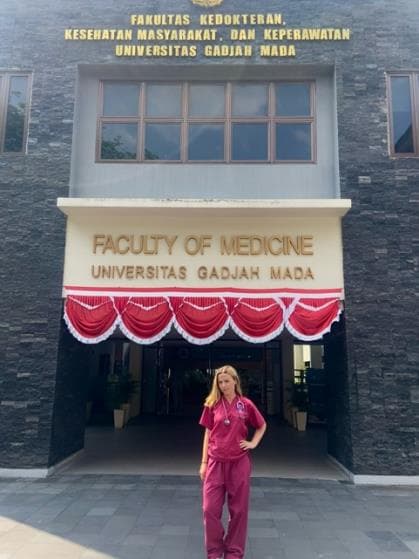
As I write this report on the scenic six-hour train ride from Yogyakarta to Malang in East Java, I wanted to take the time to reflect on my past month of living in Jogja (the way the locals call their city, Yogyakarta). This trip is the first time I have visited Asia, and what an incredible country to start my Asia travels with! I have learnt so much about the culture, the history, and the medical status of the country, and yet, I know this is only the tip of the iceberg.
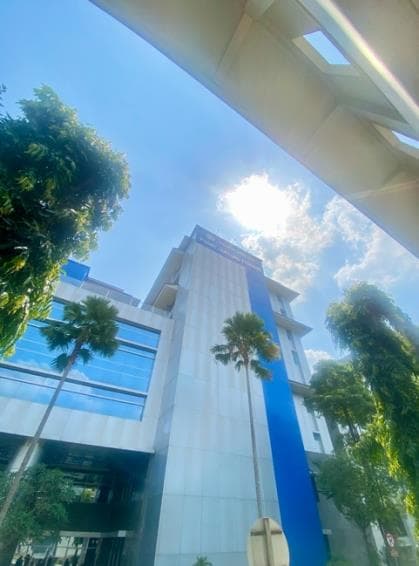
Day one of our medical elective placement was nothing but exciting! We met lots of local Indonesian medical students and allied medical professional courses. Everyone met us with open arms and were so welcoming to us. Even on the cardiology wards, the doctors and healthcare staff warmly greeted me. I was able to experience an array of cardiovascular medical practices, such as ward rounds, cardiac stress tests, ECHOs and Doppler scans. My highlight was examining paediatric cardiology patients and learning how congenital heart disease presents in Indonesia. I examined lots of patients with uncorrected congenital heart disease which had become complicated by conditions such as Eisenmengers syndrome and pulmonary hypertension. Conditions I have learnt in my medical school curriculum but rarely come face to face with. The first patient I examined on the cardiology ward was a young male, who had developed such profound complications of Rheumatic Fever, they were listing him as a priority surgical case for valvular replacement. I was shocked at how advanced his condition was, and how disabling it was for him. Coming from the rural region of Yogyakarta, the doctor explained to me this would have profound effects on his family income, since their son was unable to work due to his condition. Discussing why patients develop such advanced cardiovascular problems with the doctor, he told me that many patients from rural areas don’t seek medical attention first, often going to local village Healer’s first, there are also lots of patients lost to follow-up and some patients are so scared of surgery that they would rather avoid medical attention altogether. Common themes of financial burden, educational and employment rates related to many of my discussions when discussing patient access to healthcare.
I also spent time socialising with local Indonesian medical students and resident doctors who enjoyed drawing comparisons with their journey to becoming and working as a doctor with mine from England. Of note, I was particularly concerned by the normalisation of a 100-hour working week for resident doctors, the motivation and passion for medicine, propelling them to continue even through mental and physical exhaustion. However, the worst part of this, was hearing they all do this with no pay, and instead must pay the affiliated university fees, to complete their residency programme!
Furthermore, I attended several teaching sessions on emergency medicine and disaster response during my time at Universitas Gadjah Mada. One particularly valuable session was a talk by Professor Fu Chih Lai from Taipei Medical University on hospital-based disaster management, which explored Taiwan’s public health response to COVID-19 and how this was informed by their lessons from the 2003 SARS outbreak. This demonstrated the importance of learning from previous crises to strengthen preparedness for future emergencies. I found it particularly interesting to compare Taiwan’s approach with the UK’s response to COVID-19, prompting me to reflect on how different healthcare systems adapt to similar challenges. This experience reinforced my understanding that effective healthcare systems should not simply respond to crises but actively evaluate previous experiences and incorporate these lessons into future planning. Key lessons from this session were the importance of reflection, adaptability, and preparedness in protecting populations during large-scale emergencies, which are likely to increase in frequency and severity alongside our changing climate.
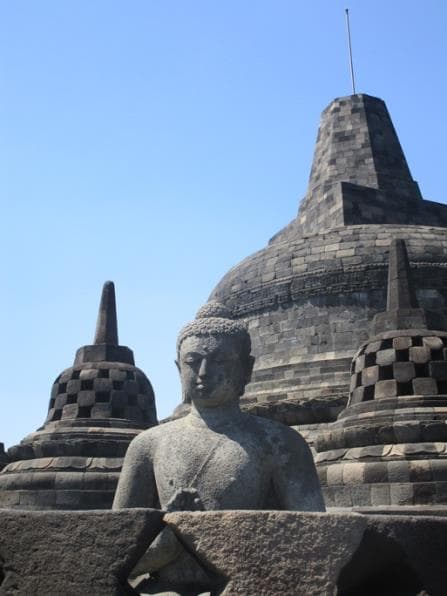
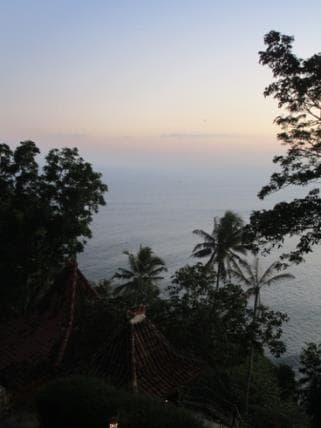
Whilst also practising lots of medicine, I fortunately was able to fit in lots of exciting sightseeing too! The richness of the Indonesian culture, was so prevalent in Jogja, lining the hustle and bustle of the city and woven into the foundations of the Special Region of Yogyakarta, protected by their Sultan rulers. As I was told on my first day of placement, Yogyakarta has it all for natural disasters; Tsunamis, Earthquakes and Volcanic eruptions, you name it, the region is capable of it all. And so naturally, our exploration of the region was guided by this statement. Our first weekend was spent beside the Indian Ocean. We woke up every morning to a sunrise over the Indian Ocean, lunch was spent protecting our food from the local Monkeys, and dinner like clockwork was spent admiring the multiple shades of the falling sun. We also ventured in-land, to the UNESCO world heritage site of Borobudur temple and
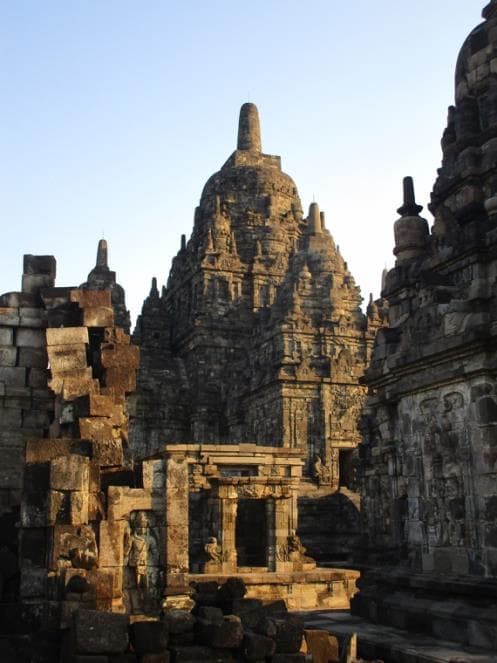
Prambanan temple, both constructed in the 9th Century. Borobudur temple being the world’s largest Buddhist monument and Prambanan containing the greatest Hindu spires. Both temples were mysteriously abandoned a century later due to volcanic eruptions and shifting royal courts. They lay hidden under jungle growth and volcanic ash for nearly 800 years before their rediscoveries. Finally, a core memory of my trip will be the evening I spent with my friends waiting to have a glimpse of lava flowing from Mount Merapi. Our local tour guide from Jogja, picked us up at 7pm and we drove for one hour up to the volcano viewpoint, with high hopes and our cameras at the ready. Unfortunately, Mother Nature greeted us with other plans. When we arrived, Mount merapi was surrounded by thick cloud. Although the views were bad, our spirits remained high and I had one of the best evenings of the trip. All we could hear was the peace and quiet and the occasional cricket, along with belly laughing from our group here and there. This showed me that its not just the place which makes the trip it is the people you surround yourself with also.
So, to everyone I met on my month in Jogja, thank you for being so kind, warm, and welcoming. I have learnt lots about not only medicine but also your culture and heritage.
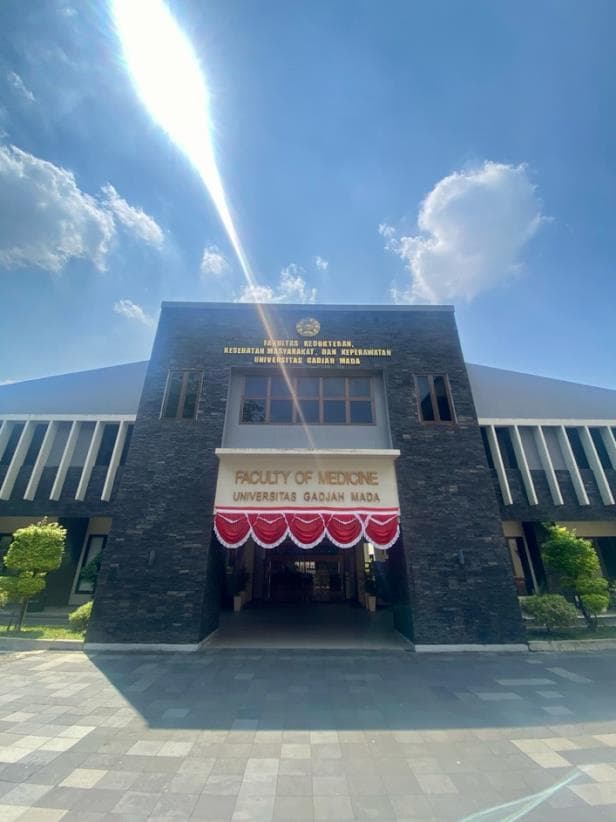
Cicely Green, 4th Year Norwich Medical Elective Student
Molly Broadway
Scholarship Report — Thank You
Dear Dr de Cothi and members of the Kidderminster Medical Society,
I hope you are all well.
I wanted to begin by saying a huge thank you for your support this year. Receiving the scholarship has made an enormous difference to me financially, and I genuinely do not think I would have been able to continue my studies without it. Your support has given me the opportunity to focus on becoming the best medical student I can be, and I am so incredibly grateful.
This year has been particularly exciting clinically, as I have had the opportunity to experience a wide range of specialties and develop many new skills.
During my first semester, I was based at Midlands Metropolitan University Hospital, where I completed rotations in cardiology, respiratory medicine, care of the elderly and neurology. This was a fantastic first placement, and I learnt how to perform cardiovascular, respiratory and neurological examinations, including cranial nerve examinations. It was a bit of a maze, but the parking situation was lovely (2 floors of staff parking!).
In my second semester, I was based at Russells Hall Hospital, where my rotations included general surgery, gastroenterology, biliary surgery, acute medicine and vascular surgery. I particularly enjoyed this placement (being closer to home certainly helped! and I was surprised by how much I enjoyed gastroenterology. I was able to watch surgeries here more, my first one being a hemicolectomy. I found it fascinating, although I'm not sure I would be able to go into surgery as a career.
I also spent three weeks at the Queen Elizabeth Hospital in Birmingham, where I had the opportunity to develop an interest in point-of-care ultrasound (POCUS). We were fortunate to have Butterfly ultrasound probes that connected directly to our phones, allowing us to perform bedside scans on patients. I was able to perform lung and abdominal ultrasounds, gain experience in resus as an area, and learn how to perform ultrasound-guided cannulation. I also completed a small quality improvement project as part of the placement, which gave me valuable experience in thinking about how clinical practice can be improved. I think it should be particularly useful this coming year, as we have to undertake a similar project for the university, and the consultant there said I could continue to build on the work I did at the QE!
Throughout the year, I have developed a number of practical clinical skills, including administering IV fluids, injections and fluid boluses, as well as performing ophthalmoscopy and otoscopy. Each of these experiences has helped me become more confident in clinical environments and reinforced how much I enjoy working directly with patients.
I was also able to spend a week in a primary school, to learn more about child development and developmental milestones, as well as how to communicate effectively with younger children, especially the children with learning difficulties. It was a really valuable experience and reminded me how important it is to adapt the way we communicate depending on the age and needs of the person in front of us.
My GP placement was in Worcester. General Practice has always been my favourite placement, and it remains the specialty I am currently most interested in pursuing. This year was particularly valuable because we were given the opportunity to lead our own clinics, formulate management plans and speak to patients independently. Being trusted with this responsibility was a huge step in my development and made me even more certain that I would love a career in General Practice.
Academically, I am very pleased to have passed all of my examinations this year, achieving an overall mark of 64% in my exams. I also achieved 69% in my evidence review. These results are particularly meaningful to me given the pressures I have faced this year alongside my studies, and I am proud that I have been able to continue progressing academically while gaining so much clinical experience.
Outside of my clinical placements, I was also fortunate to attend conferences focused on widening participation and medical education. I attended the Widening Participation in Medicine conference in Glasgow, as well as the More Than a Medic conference in London, organised by TAMS. These experiences allowed me to meet other students and doctors, learn more about opportunities within medicine and further develop my interest in widening access to the profession. In particular, I have found that I am particularly passionate about health inequalities and health literacy, and would like to work to improve that in the future.
Looking back over the year, I feel incredibly proud of how much I have developed, both clinically and personally. None of this would have been possible without the support of the scholarship. Your funding genuinely kept me going at a time when continuing my studies felt financially very difficult, and I cannot adequately express how grateful I am for that.
Thank you for believing in me and investing in my future. I hope that this report gives you some idea of what your generosity has allowed me to achieve this year. I will carry your support with me throughout the rest of my medical training and, hopefully, one day be able to give the same support and encouragement to someone else.
If there were ever an opportunity for the scholarship committee to support me again in the future, I would be incredibly appreciative. I completely understand that this may not be possible, but I wanted to express how grateful I would be for any further help with my remaining medical studies.
Thank you once again for everything you have done for me this year. Your support really did keep me going, and I could not have got through this year without it.
With my sincerest thanks,
Molly